
Posts by Angsuman Dutta
9 Ways Enterprise Teams Use Data Reconciliation
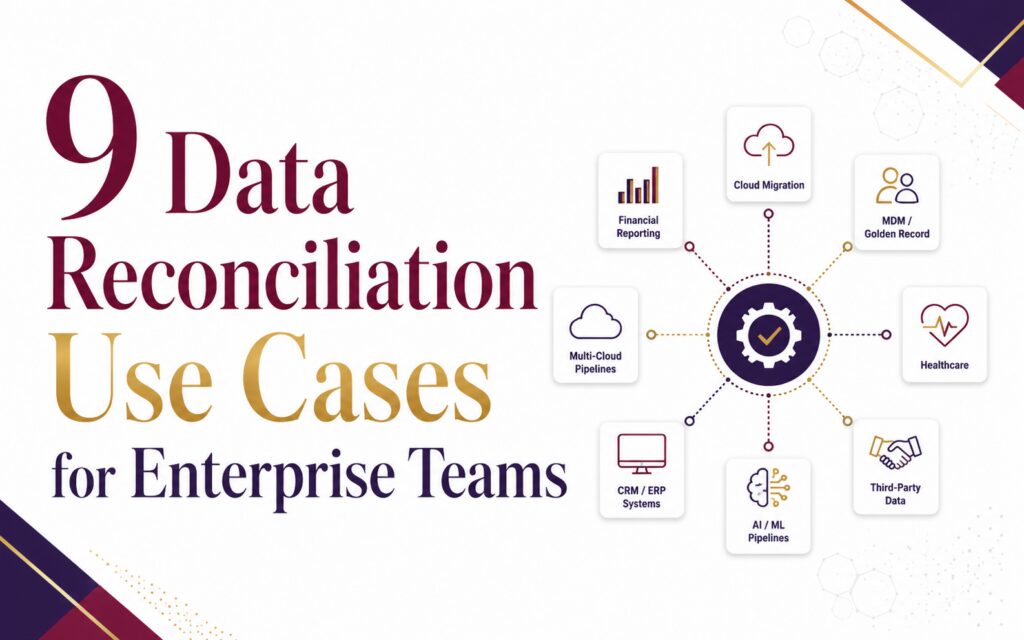
Data reconciliation is often mistaken for an accounting-only process. For data teams, the concept is much broader. Whenever an important business fact is copied, transformed, migrated, aggregated, merged, or received from another system, the organization needs some way to determine whether the resulting data still agrees with what it should represent. IBM’s definition of data…
Read MoreHow to Evaluate Data Reconciliation Software in 2026
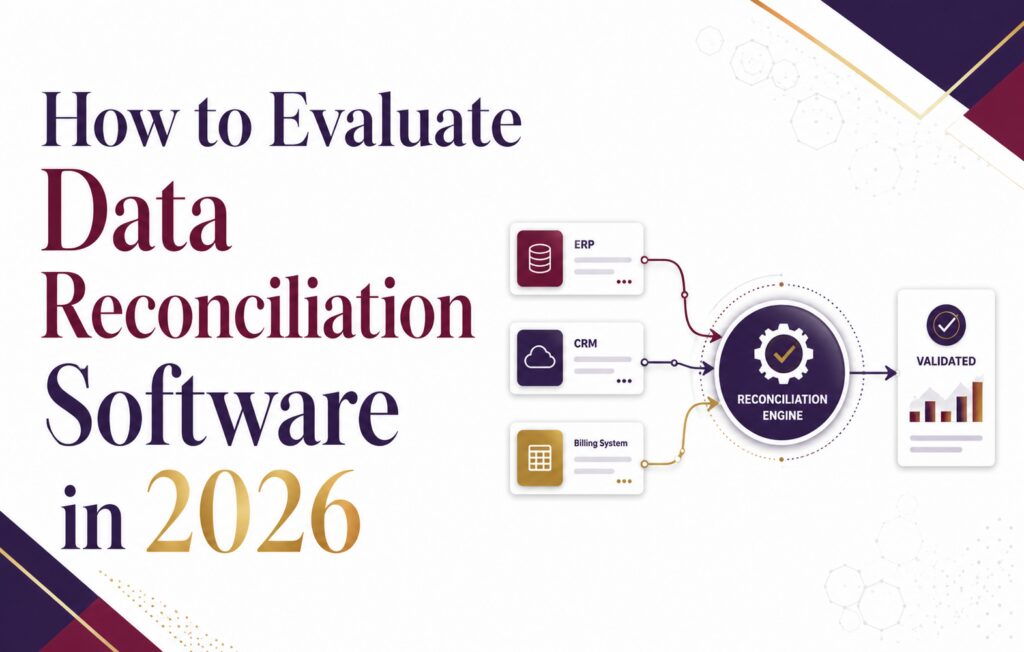
Search for “data reconciliation software,” and you can quickly encounter two very different categories of products. One is designed primarily for finance teams reconciling bank accounts, ledgers, transactions, and the financial close. The other is designed for data and technology teams trying to prove that information remained correct as it moved between databases, pipelines, cloud platforms, warehouses, and applications. …
Read More7 Criteria for Data Matching Tools in 2026
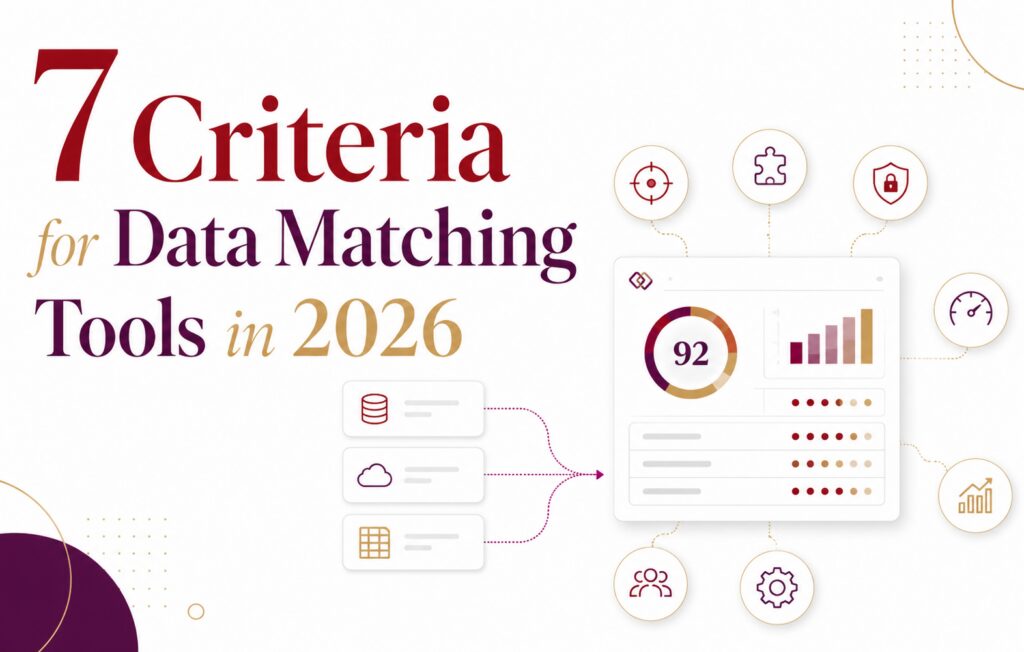
A data matching tool evaluation can easily become a feature-counting exercise. Vendor A supports more connectors. Vendor B says it uses AI. Vendor C has the longest feature list. None of those facts prove that the software will correctly match your data. Enterprise matching decisions need a more disciplined framework for evaluating data matching software. The purpose…
Read MoreData Matching Software: A 2026 Buyer’s Guide
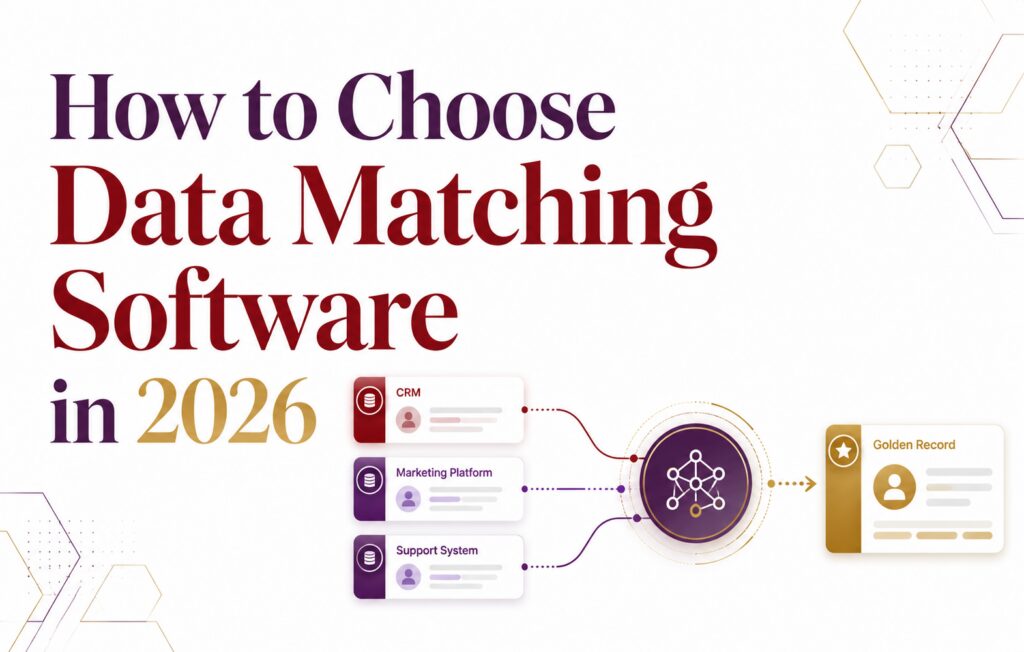
Choosing data matching software used to be relatively straightforward. A team had duplicate customer records, inconsistent supplier names, or two databases that needed to be compared, so it implemented rules to identify likely matches. Enterprise environments in 2026 are more complicated. The same business entity can appear across CRM, ERP, billing, data warehouses, lakehouses, third-party feeds, operational applications, and analytics systems.…
Read MoreAWS Billing Glitch: A $1.5 Trillion Lesson in Data Reconciliation
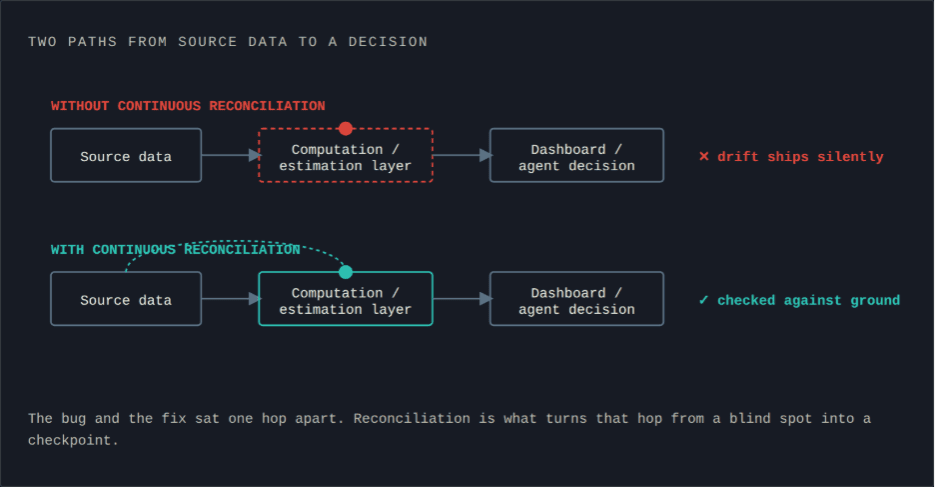
A billing glitch turned Cost Explorer into a horror movie for a weekend. Nobody paid a cent, but the failure underneath is one for every data team, and every AI agent, should recognize. What Happened During the AWS Billing Glitch On the night of July 16, AWS customers watched their Cost Explorer dashboards do something no finance team ever wants…
Read MoreManaging Tariff Implications Through Data Integrity in Global Supply Chains
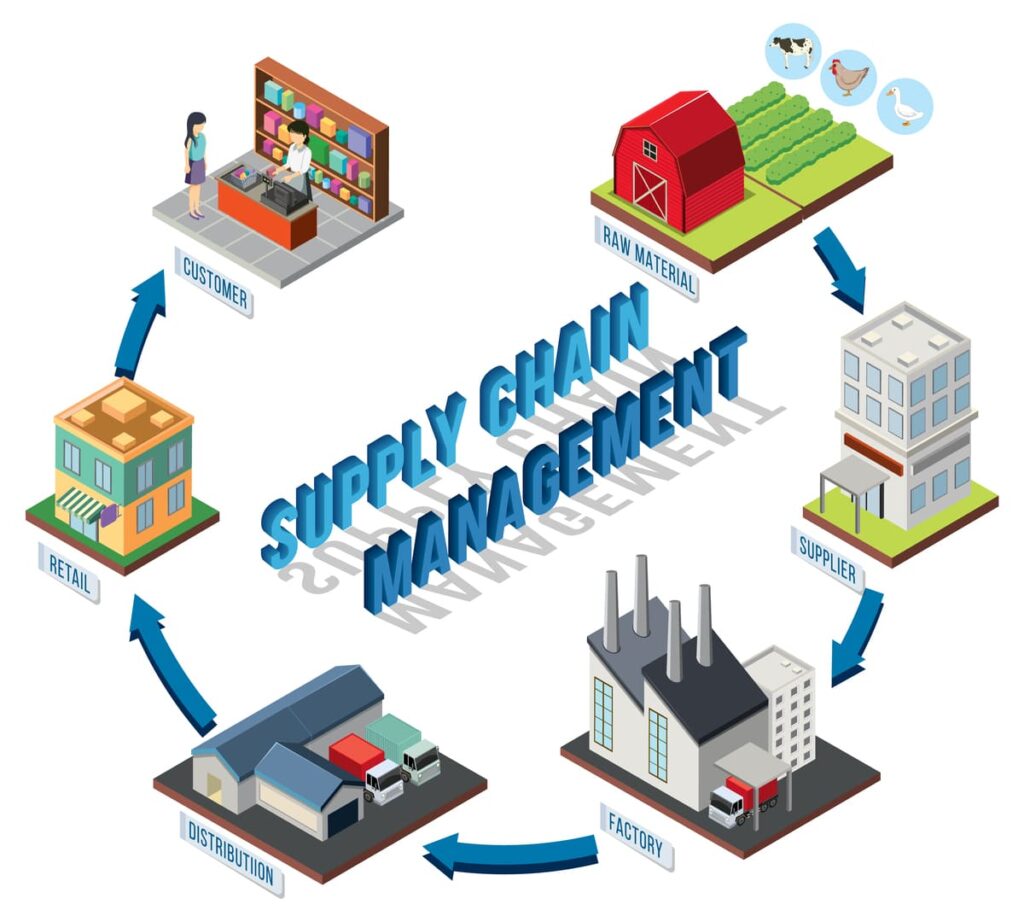
In today’s global marketplace, supply chains span continents. From consumer electronics to industrial machinery, companies rely on global sourcing and distribution to stay competitive. But with this reach comes complexity—especially when it comes to tariffs.
Read MoreAgentic Data Trust: Next Frontier for Data Management
As data grows exponentially, ensuring accuracy, security, and compliance is increasingly challenging. Traditional rule-based data quality checks—whether downstream (reactive) or upstream (proactive)—still produce substantial manual overhead for monitoring and resolving alerts. Agentic Data Trust addresses these issues by leveraging intelligent agents that minimize human intervention through automated oversight, rule updates, and data corrections. The result…
Read More5 Emerging Data Trust Trends to Watch in 2026

As organizations accelerate their data-driven initiatives, data quality is evolving from a manual, back-office function to a core business priority. By 2026, we’ll see a new generation of data quality capabilities seamlessly integrated into analytics pipelines, AI models, and decision-making frameworks. Here are five emerging trends reshaping the future of data quality: 1. Data Trust…
Read MoreChallenges With Data Observability Platforms and How to Overcome Them
Core Differences Between Data Observability Platforms and DataBuck Many organizations that initially embraced data observability platforms are now realizing the limitations of these solutions, especially as they encounter operational challenges. Although data observability platforms started strong—tracking data freshness, schema changes, and volume fluctuations—their expansion into deeper profiling has created significant drawbacks. Below, we explore the…
Read MoreImproved Data Quality Trust with DataBuck over “Spray and Pray DQ”
In the world of modern data management, many organizations have adopted data observability solutions to improve their data quality and accuracy. Initially, these solutions had a narrow focus on key areas such as detecting data freshness, schema changes, and volume fluctuations. This worked well for the early stages of data quality management, giving teams visibility…
Read More