
Seth Rao
CEO at FirstEigen
Mainframe Data Reconciliation for Cloud Migration
Cloud migration is no longer just an infrastructure decision. For data leaders and data engineers, it is a trust decision.
When enterprises move data from legacy mainframe systems into modern analytics platforms, the technical mainframe migration to cloud is only part of the challenge. The harder question comes next: How do you know the data in the cloud still reflects the original system of record?
That is where mainframe data matching platform becomes essential. Without a reliable way to compare source and target data, modernization programs can introduce reporting gaps, downstream logic issues, regulatory exposure, and reduced confidence in analytics.
This is the risk many teams discover too late. Moving data is not the same as proving it can be trusted. The real goal of modernization is not simply to land data in a new environment. It is to create a foundation for decisions the business can rely on.
At FirstEigen, we help solve this problem with DataBuck, an AI-powered data quality, validation, and observability platform that helps teams reconcile legacy mainframe data with cloud platforms such as Databricks and Google BigQuery.
Why Data Validation Matters in Mainframe Migration
Many organizations begin with a clear architecture plan. They identify source systems, define ingestion pipelines, map schemas, and provision the target cloud platform. On paper, the migration appears complete once data lands in the new environment.
In practice, success depends on whether the data remains complete, accurate, and consistent across systems.
For data leaders, this affects confidence in reporting, compliance, and business continuity. For data engineers, it affects pipeline reliability, issue resolution, and the credibility of every dashboard, model, and downstream workflow built on top of migrated data making data validation software an important part of the migration process.
This is why data validation during mainframe migration should not be treated as a final checkpoint. It should act as an active control throughout the migration lifecycle. The AWS billing incident shows how data discrepancies can affect downstream financial reporting and decision-making.
Common Mainframe Migration Challenges:
These mainframe to cloud migration challenges can appear during extraction, transformation, loading, or post-migration operations.
- Record count mismatches between the source and target platform
- Schema, format, or data type differences introduced during transformation
- Inconsistent business-rule application across legacy and cloud processing layers
- Missing records introduced during batch or streaming ingestion
- Drift between the source system and the analytics environment over time
- Limited visibility into whether analytics-ready data still reflects the original business truth
When these issues go unresolved, trust erodes quickly, even when the migration appears successful from an engineering standpoint.
Why Cloud Analytics Needs Source Validation
Databricks and BigQuery offer scalable processing, broad accessibility, and strong foundations for analytics and AI. But speed, scale, and Databricks data quality do not guarantee correctness. Databricks data matching can help teams identify inconsistencies during cloud migration.
A dashboard may refresh faster in the cloud, yet still reflect the wrong business logic. A model may run on larger volumes of data, yet still be trained on transformed values that no longer align with the legacy source. A reporting team may gain access to a more modern platform, while losing certainty that the numbers match the system the business still depends on.
That is why cloud data trust must be earned through validation.
This is especially important in regulated or operationally sensitive environments, where small mismatches can affect financial reporting, service operations, risk decisions, or audit readiness.
Mainframe Migration Challenges for Data Teams
Data leaders are responsible for trusted reporting, continuity, governance, and return on modernization investments. They need evidence that migration programs are creating usable, reliable data rather than relocating risk into a new stack.
Data engineers face a different but connected challenge. They are responsible for moving and transforming data across environments while maintaining integrity at scale. They need a way to validate continuously without creating unnecessary operational burden.
That is the real question behind every mainframe to cloud migration: not only Can we move the data? but Can we prove the migrated data remains trustworthy? The right data migration strategy can help teams manage this process while controlling migration costs.
How DataBuck helps teams prove trust
DataBuck AI enterprise data quality software is designed to validate and monitor data across lakes, pipelines, and warehouses while keeping validation close to the data. For organizations pursuing mainframe modernization and moving legacy data into Google Cloud, Databricks, or hybrid lakehouse environments, DataBuck helps establish trust between the source and target systems.
With DataBuck, teams can:
- Reconcile datasets between legacy mainframe environments and cloud targets such as Databricks and BigQuery
- Validate record counts, schema consistency, completeness, and business-rule alignment
- Detect anomalies and drift before bad data affects downstream reporting or analytics
- Generate objective Data Trust Scores that quantify whether a dataset is ready for use
- Create continuous controls across the migration lifecycle rather than relying on one-time checks
- Reduce the burden of maintaining large volumes of static validation rules
Instead of discovering inconsistencies after business users raise concerns, teams can detect issues earlier and manage them with greater precision.
Mainframe-to-BigQuery Reconciliation Example
Consider a finance team moving policy or claims data through a mainframe data migration into BigQuery for reporting and analytics.
At first glance, the migration looks successful. Record counts align at the table level, ingestion jobs complete on schedule, and dashboards begin to populate. But reconciliation reveals that several transaction status codes were transformed differently during ingestion. The data is present, yet the business meaning has shifted.
Without that check, dashboards may show incorrect claim volumes, revenue exposure, or exception rates. The issue would not be a platform failure. It would be a trust failure.
This is why reconciliation matters. It does more than confirm that data arrived. It confirms that the meaning, quality, and usability of the data survived the move.
A practical approach to migration validation
A strong migration program should include reconciliation at every major stage of the journey helping teams maintain data integrity during cloud migrations:
1. Baseline the source system
Before migration begins, define the quality and structural characteristics of the source data. This creates the benchmark against which the target environment will be measured.
2. Validate ingestion into the cloud platform
As data lands in Databricks or BigQuery, compare counts, formats, keys, and critical business fields against the source system.
3. Reconcile after transformation
Transformation logic often introduces hidden differences. Validation should continue after standardization, enrichment, or aggregation.
4. Monitor trust continuously
Migration does not end at cutover. Ongoing validation is essential to ensure new pipelines, schema changes, and business updates do not reintroduce risk.
5. Give stakeholders measurable trust indicators
Data engineers need detailed technical validation. Data leaders need clear indicators that show whether a dataset is trustworthy for analytics, operations, and reporting. Data Trust Scores help bridge that gap.

Why this matters for Databricks and BigQuery programs
Modern analytics platforms create real value only when the data they contain can be trusted.
For organizations migrating from mainframe environments, reconciliation is what turns modernization into confidence. It gives teams the ability to show that the target platform is not only faster and more scalable, but also aligned with the business truth held in legacy systems.
That is the control many migration programs underestimate. Infrastructure modernization alone does not create trust. Continuous validation does.
From Mainframe Migration to Trusted Cloud Data
The future of enterprise analytics is cloud-based, but trust cannot be migrated by assumption. It has to be validated.
If your team planning a mainframe to cloud migration into Databricks or BigQuery, reconciliation should be a core part of the architecture, not an afterthought. The combination of validation, observability, and measurable trust indicators helps ensure that analytics environments support accurate decisions from day one.
DataBuck helps data leaders and data engineers move forward with greater confidence by identifying discrepancies early, quantifying what can be trusted, and making migration quality visible throughout the process.
Final takeaway
The migration risk nobody talks about is not whether data reaches the cloud. It is whether the business can still trust what arrives there.
For teams moving from mainframe systems into Databricks or BigQuery, reconciliation is the control that protects analytics quality, reporting confidence, and operational reliability.
With DataBuck, organizations can validate what changed, quantify what can be trusted, and modernize with more confidence.
FAQs
Data reconciliation is the process of comparing data in the target cloud platform with data in the source mainframe system to confirm that records, values, formats, and business logic remain aligned after migration. It helps teams verify that the cloud environment reflects the original system of record.

Discover How Fortune 500 Companies Use DataBuck to Cut Data Validation Costs by 50%

Enter your email address to access to downloads
Recent Posts
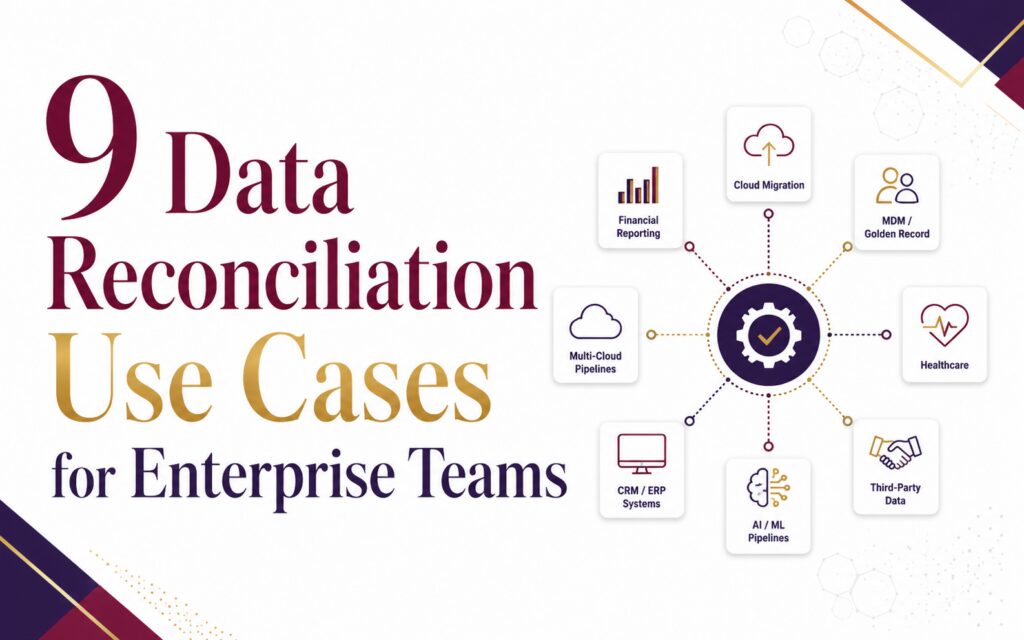
9 Ways Enterprise Teams Use Data Reconciliation
Data reconciliation is often mistaken for an accounting-only process. For data teams, the concept is much broader. Whenever an important…
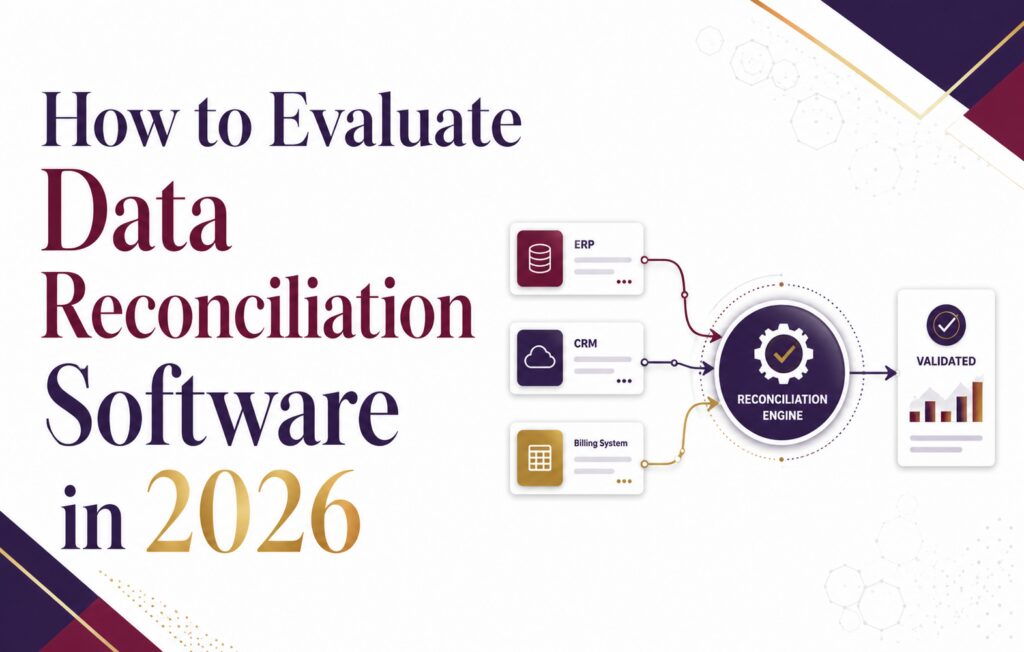
How to Evaluate Data Reconciliation Software in 2026
Search for “data reconciliation software,” and you can quickly encounter two very different categories of products. One is designed primarily for finance teams reconciling…
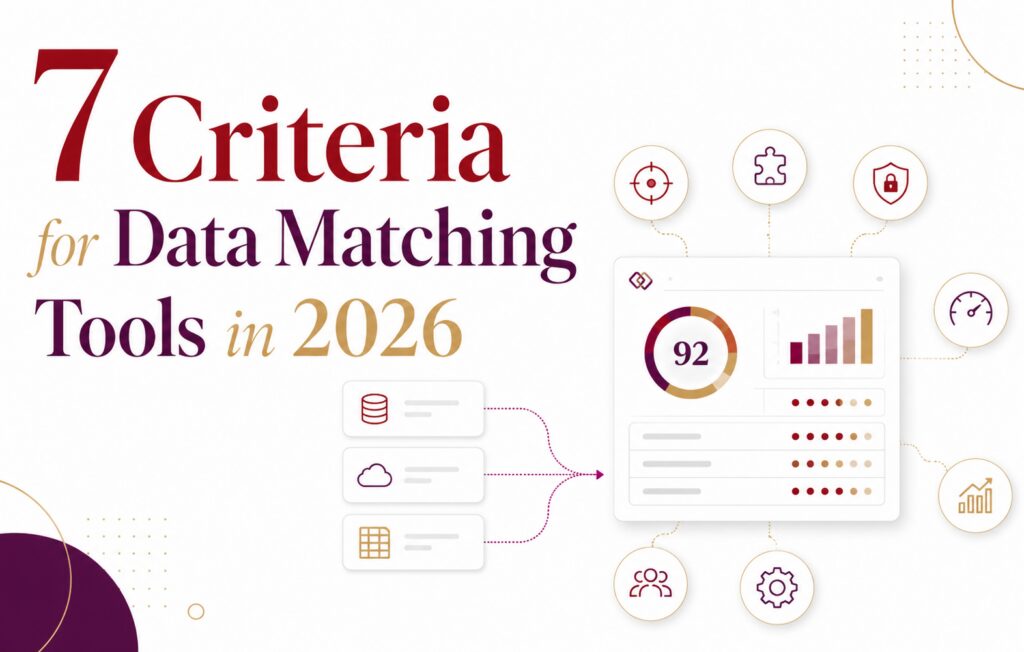
7 Criteria for Data Matching Tools in 2026
A data matching tool evaluation can easily become a feature-counting exercise. Vendor A supports more connectors. Vendor B says it…
Bad Data Is Costing You More Than You Think