

Seth Rao
CEO at FirstEigen
AI-Powered Data Quality Validation for Smarter AML Detection
Fraud, Anti-Money Laundering (AML) and counter-terrorist financing (CTF) programs are only as good as the data they consume. Advanced monitoring engines, sanctions-screening platforms, and machine learning models cannot compensate for bad input data. If the data is incomplete, inconsistent, or inaccurate, AML tools will generate false positives, miss suspicious transactions, and expose financial institutions to regulatory penalties and reputational harm.
Fraud experience of a typical mid-sized U.S. bank:

This is not theory. Regulators and enforcement bodies around the world have repeatedly emphasized—and penalized—firms for weak data-quality controls. Below, we explore why data quality (DQ) checks must be performed before any data enters fraud detection or AML systems, supported by real-world impacts and publicly available examples.

Regulatory Expectations: Data Integrity is Non-Negotiable
- U.S. regulatory guidance: The Office of the Comptroller of the Currency (OCC) and the Federal Reserve’s model risk management guidance makes clear that model inputs must be “reliable.” Since AML transaction monitoring and sanctions-screening tools are considered models, firms are expected to validate input quality as part of sound risk management .
- New York Department of Financial Services (NYDFS) Part 504: This rule requires covered institutions to ensure “the integrity, accuracy, and quality of data” flowing into AML programs. Banks must confirm that all relevant sources are mapped, data fields are complete, and transfers into monitoring systems are accurate .
- FCA (UK) Dear CEO letter: The Financial Conduct Authority highlighted failures in transaction monitoring, including poor data feeds and lack of testing for data integrity, as key supervisory concerns.
In short, regulators view DQ assurance as a legal obligation, not a best practice.
The Cost of Ignoring Data Quality

Industry-Wide False Positives
Studies show that more than 90% of fraud and AML transaction-monitoring alerts are false positives. McKinsey and others point to poor data quality—such as missing fields, duplicate records, or unstandardized customer attributes—as a core driver of wasted investigative effort and inflated compliance costs.
These cases demonstrate how bad data directly leads to billion-dollar fines, wasted operational resources, and missed suspicious activity.

Operational Impacts of Poor Data Quality
- False Positives Overload: Incomplete or inconsistent customer names, addresses, or identifiers lead to spurious matches against sanctions or PEP lists. Compliance teams drown in useless alerts, driving up OPEX.
- False Negatives (Missed Risks): If transaction fields (payer, counterparty, jurisdiction) are missing or mis-mapped, suspicious activity never enters the AML engine at all. Regulators treat this as a severe failure.
- Sanctions Screening Failures: The Wolfsberg Group emphasizes that sanctions screening depends on accurate, complete, and standardized customer/transaction data. A missing date of birth or country code can mean a prohibited entity slips through .
- System Migrations and Integrations: As USAA discovered, switching or upgrading monitoring platforms without rigorous data-quality validation can suppress legitimate alerts and create regulatory breaches.
- Regulatory and Reputational Risk: Enforcement trends show billions in fines globally every year for AML control failures. Almost every case involves some element of poor data capture, mapping, or integrity .
What to Check Before Data Enters Fraud Detection and AML Systems
To avoid these risks, financial institutions must apply systematic pre-ingestion DQ checks:
- Coverage & Mapping: Confirm that all products, accounts, and channels are mapped into AML monitoring. Reconcile record counts end-to-end (required under NYDFS 504).
- Field Completeness & Validity: Ensure mandatory fields (payer/payee names, DOB, addresses, IDs, country codes, transaction references) are populated and in the correct format.
- Accuracy & Consistency: Cross-validate with systems of record, detect duplicates, normalize spellings, and handle transliterations for names.
- Timeliness: Monitor ingestion windows to ensure transactions are captured in time for reporting obligations. Late or missing batches can result in SAR/IFTI reporting breaches, as in Westpac’s case.
- Testing & Validation: Run “above-the-line” and “below-the-line” testing to see how alerting changes with data corrections. Pilot new systems in parallel and reconcile discrepancies (lesson from USAA).
- Reference Data Hygiene: Ensure sanctions lists, geographic codes, and customer reference data are up-to-date and aligned across systems.
- Governance & Auditability: Maintain lineage, audit trails, and periodic revalidation of feeds. Regulators expect documented proof of ongoing DQ monitoring.
How a Data Quality AI Agent trained in banking regulations can help
Fraud and AML programs live or die on the quality of their inputs. Regulators—from the OCC and FinCEN to the FCA and AUSTRAC—consistently stress the need for robust data-quality validation. Enforcement actions against Westpac and USAA prove the financial and reputational damage caused when data integrity is overlooked.
Performing data quality checks before data enters fraud and AML systems reduces false positives, prevents missed risks, and—most importantly—keeps institutions compliant with legal expectations. In an era where AML penalties reach into the billions, ensuring data integrity is not just good governance; it is a business-critical necessity.
Clean data is your first defense against financial crime.


Using DataBuck, a data quality monitoring AI Agent trained in fraud detection best practices, banking, and AML regulations, as a pre-AML Data Validation Layer significantly reduces false positives, reduces risk, and improves SAR conversion.

Looking Ahead
Agentic AI to enhance data trust represents an evolution in data management—shifting from reactive oversight to proactive, self-governing operations. By leveraging intelligent agents, organizations can detect and resolve fraud and AML issues faster, reduce manual tasks, and foster good compliance. As data complexity, fraud sophistication, and regulatory demands grow, adopting an agentic framework becomes critical for efficiency and stakeholder confidence. Embracing this paradigm empowers businesses to remain agile, competitive, and equipped with trustworthy data for future innovations.
To know more about DataBuck and schedule a demo, connect with FirstEigen expert.

Discover How Fortune 500 Companies Use DataBuck to Cut Data Validation Costs by 50%

Enter your email address to access to downloads
Recent Posts
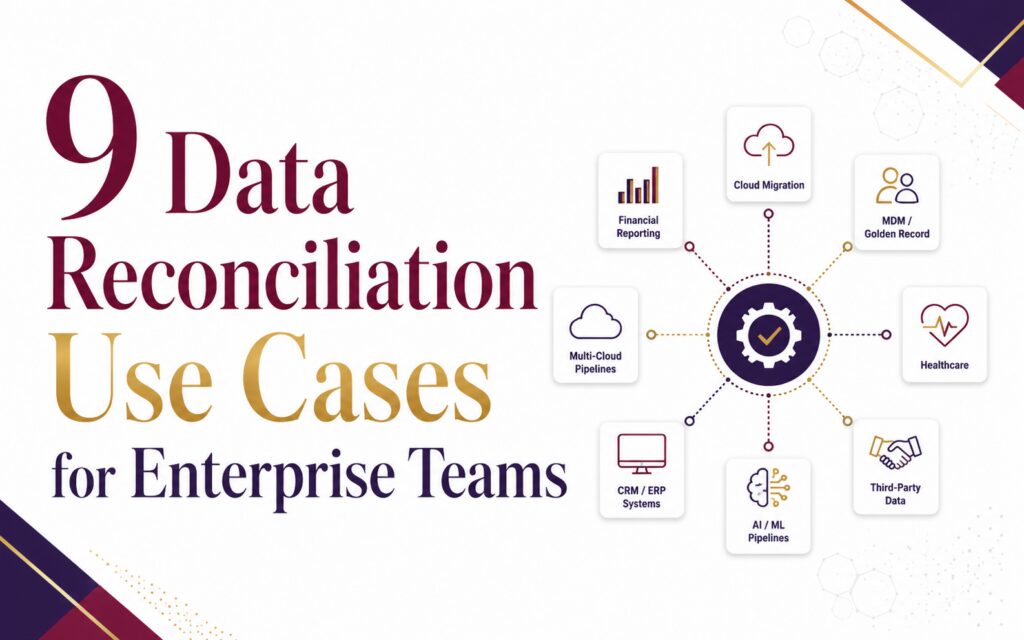
9 Ways Enterprise Teams Use Data Reconciliation
Data reconciliation is often mistaken for an accounting-only process. For data teams, the concept is much broader. Whenever an important…
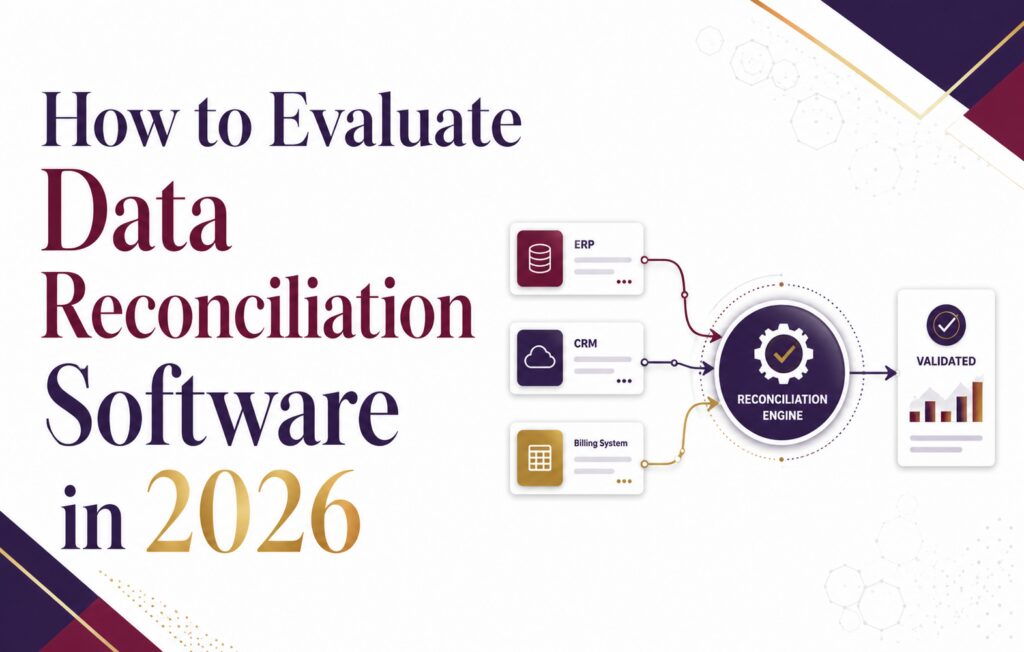
How to Evaluate Data Reconciliation Software in 2026
Search for “data reconciliation software,” and you can quickly encounter two very different categories of products. One is designed primarily for finance teams reconciling…
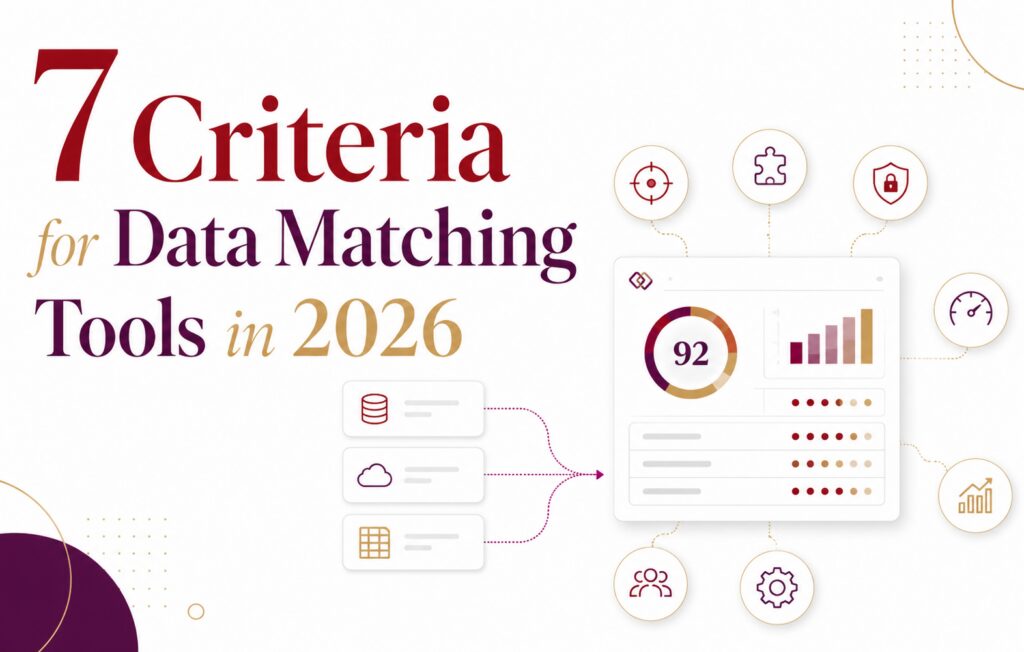
7 Criteria for Data Matching Tools in 2026
A data matching tool evaluation can easily become a feature-counting exercise. Vendor A supports more connectors. Vendor B says it…
Bad Data Is Costing You More Than You Think